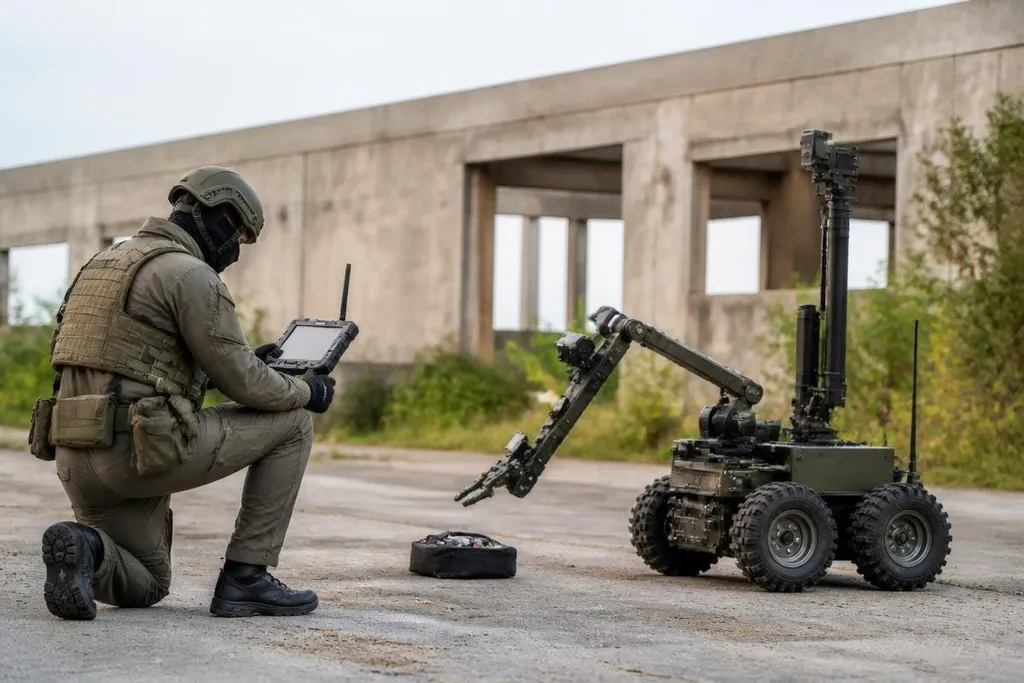
Bomb-disposal robots already let trained teams inspect suspicious objects from a safer distance. AI adds software that can sort visual data, flag unusual details, and help an operator control the robot in difficult conditions. It doesn't remove the need for human judgment.
- AI can mark objects or features for closer inspection
- Sensor data can give operators more context than one camera view
- Human teams still decide what action the robot takes
From remote control to decision support
A standard bomb-disposal robot follows commands from an operator. The team drives it, moves the arm, adjusts the camera, and decides what the object may be. AI can sit beside that control system and point out details the operator may want to check.
That support might include object detection, image comparison, or scene mapping. In plain terms, the software looks for patterns in camera or sensor data and presents them to the person running the robot. The operator remains responsible for deciding whether the result is useful.
This matters because a bomb scene can contain poor lighting, smoke, damaged vehicles, loose cables, and other objects that make visual checks harder. AI may help sort the scene, but a warning from software is still a prompt for inspection, not proof of an explosive device.
Better information from the same robot
AI can combine data from several sensors into one working view. A robot may carry visible-light cameras, thermal cameras, microphones, or systems that measure distance. The software can place those readings together so the operator has more context before moving the arm or approaching an object.
The practical gain comes from fewer blind spots. A thermal image may show heat that a normal camera misses, while distance data can help build a map around the target. Each sensor has limits, so the operator needs to know which view produced each warning.
AI can also help with camera control. It may keep an object in view while the robot moves, adjust focus, or mark a feature for later review. These tasks reduce manual work during inspection, but they don't prove that the system understands the scene as a person does.
The test setting changes what an AI claim means. A report from Robot 24 can place the robot, task, control method, and test conditions beside the result. A system that tracks an object in a clear lab may lose it among wires, dust, or damaged vehicles during a callout.
Where AI can fail
AI systems depend on the data used to train and test them. A model trained on clear images may perform poorly with mud, darkness, glare, unusual packaging, or objects it has not seen before. A false warning can slow a team down, while a missed feature can create a serious safety risk.
The robot's physical limits remain too. AI can't give a damaged arm more reach, make tracks grip every surface, or prevent a camera from being blocked. Wireless links can also fail, and the operator may lose access to the data needed for a software recommendation.
For that reason, a safe design needs a clear fallback. The team should be able to control the robot without the AI layer, review the raw sensor feeds, and stop movement when the system behaves in an unexpected way. Logging each alert also helps trainers find weak points after an operation.
I'd keep AI in an advisory role until a team has measured its results across the conditions it actually faces.
What a team should check before deployment
A procurement or safety review should focus on the system's working limits, not the label attached to its software. Check these points:
- Test conditions: Ask which lighting, weather, surfaces, and object types were used during trials.
- Human control: Confirm that an operator can reject a warning, take manual control, and stop the robot at once.
- Raw data access: Check whether the team can view the original camera and sensor feeds beside the AI result.
- Failure handling: Find out what happens after a lost connection, blocked camera, low battery, or software fault.
- Record keeping: Confirm that alerts, operator actions, and system errors are stored for later review.
- Update control: Ask who approves new software and how the team tests it before field use.
These checks also reveal what the system cannot prove. A detection label may identify a shape or pattern, but it doesn't establish the object's contents, condition, or safe handling method.
The next step for bomb-disposal robots is measured assistance: better scene data, clearer warnings, and control systems that fail in known ways. The question for each deployment is specific: does the AI help the team make a safer decision under the conditions that team will face?